Polished, bevelled or framed? A builder's guide to vanity mirror edge finishes, sizing, fixing, safety backing and coordinating with other bathroom trades.
The vanity mirror is usually one of the last items on a bathroom fit-off, which is exactly why it gets rushed. A mirror that is the wrong width for the vanity, clashes with a wall light, or sits on a tile joint that was never planned for it can undo an otherwise tidy bathroom. Getting the edge finish, size and fixing right at the spec stage takes five minutes and saves a lot of fiddling on site.
This guide walks through the three common vanity mirror options, polished edge, bevelled edge and full frame, and the practical details builders should lock in.
The three edge options
Polished edge
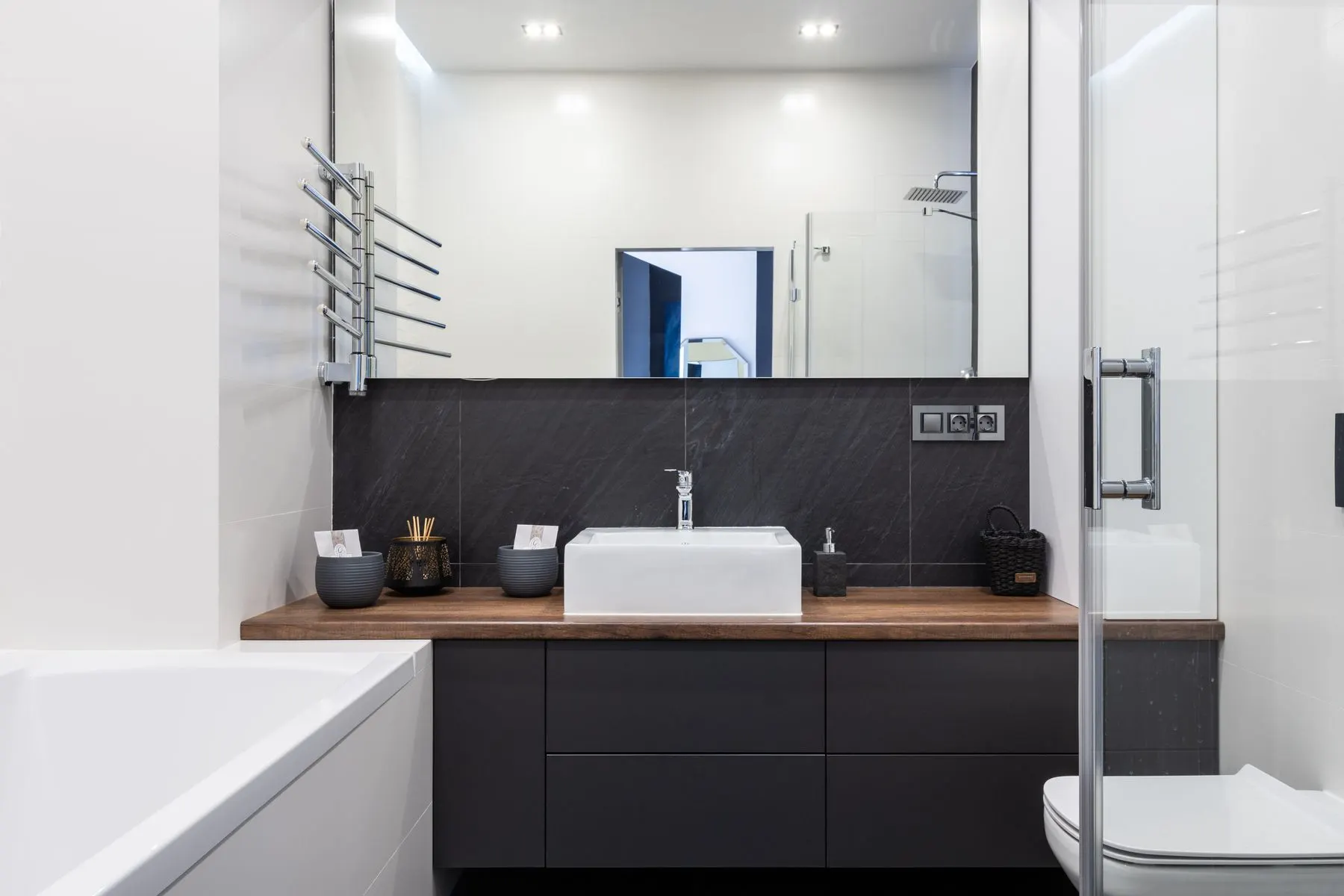
A polished edge mirror has its cut edges ground smooth and polished to a clean, flat finish. It is the simplest, most minimal look and suits most contemporary bathrooms. Polished edge mirrors work well in project homes, apartments and rental builds where the brief is clean and neutral.
Bevelled edge
A bevelled edge has a sloped border ground around the perimeter, typically a band of 10 to 25mm or so. The bevel catches light and gives the mirror a more finished, traditional feel. It suits Hamptons, classic and some luxury styles, and can help a mirror stand out against a plain tiled wall.
Full frame
A full frame mirror sits inside a frame around the perimeter. Frames protect the edge, add a design element and can be matched to tapware, shower screen hardware or cabinet handles. They suit feature bathrooms and powder rooms where the mirror is meant to be seen as a design piece.
| Option | Look | Typical use |
|---|---|---|
| Polished edge | Clean, minimal | Most new builds, apartments, rentals |
| Bevelled edge | Classic, light-catching | Traditional or Hamptons styles, upgrades |
| Full frame | Feature, coordinated | Master ensuites, powder rooms, display homes |
See the range of vanity mirrors we make to order for builders.
Sizing the mirror to the vanity
A mirror that looks right is sized to the vanity, not the wall. Some general guidelines:
- Width: a common approach is to match the vanity width or come in slightly narrower. A mirror wider than the vanity can look top-heavy unless it is designed to run wall to wall.
- Double vanities: decide between one long mirror or two separate mirrors centred on each basin. Two mirrors need the basin centres confirmed on the plan.
- Height: set the bottom of the mirror a sensible distance above the vanity top or splashback so it clears the tapware, and make sure the top suits the heights of the likely users.
- Wall-to-wall mirrors: measure after tiling, allow for walls out of square, and note any power points or switches that need cut-outs.
Always give your supplier finished dimensions, not dimensions taken from the frame or before tiling.
Fixing considerations
How the mirror is fixed affects both the look and the long-term result.
- Adhesive fixing: common for polished and bevelled mirrors on tiled or sheeted walls. Use a mirror-safe adhesive, as some general-purpose adhesives and silicones can attack the mirror backing.
- Mechanical fixing: clips, channels or concealed brackets can be used, and may be needed on some substrates or larger mirrors.
- Substrate: make sure the wall behind the mirror is flat. Tile lippage or a bowed wall shows up as distortion in the reflection.
- Framed mirrors: usually hang or fix via the frame, so check the fixing method and provide suitable backing in the wall if needed.
Safety backing and AS 1288
AS 1288 (Glass in buildings) sets out where safety glass is needed, and in some locations that extends to mirrors. Depending on the size of the mirror, how it is fixed and where it sits, a mirror may need a safety backing, such as a vinyl safety film applied to the back, so that if it breaks the pieces are held together.
Situations that often raise the question include larger mirrors, mirrors close to floor level, and mirrors that are not fully supported by adhesive across their back. The exact requirement depends on the installation, so confirm with your certifier and let your mirror supplier know what is required when you order.
Humidity and wet areas
Bathrooms are hard on mirrors. Steam, cleaning products and water pooling at the bottom edge can all cause the silver backing to deteriorate, which shows up as black spots creeping in from the edge.
- Make sure the bathroom has adequate exhaust ventilation.
- Keep the bottom edge of the mirror clear of the splashback surface so water cannot sit against it.
- Use sealants and adhesives recommended for mirrors, and avoid acid-cure silicones against the backing.
- Consider a framed mirror or a gap above the vanity top in bathrooms that will see heavy use.
Coordinating with other trades
The mirror interacts with more trades than people expect. Settle these on the plan before rough-in:
- Shaving cabinets: if the client wants a shaving cabinet instead of, or as well as, a mirror, decide early. Recessed cabinets need framing allowances.
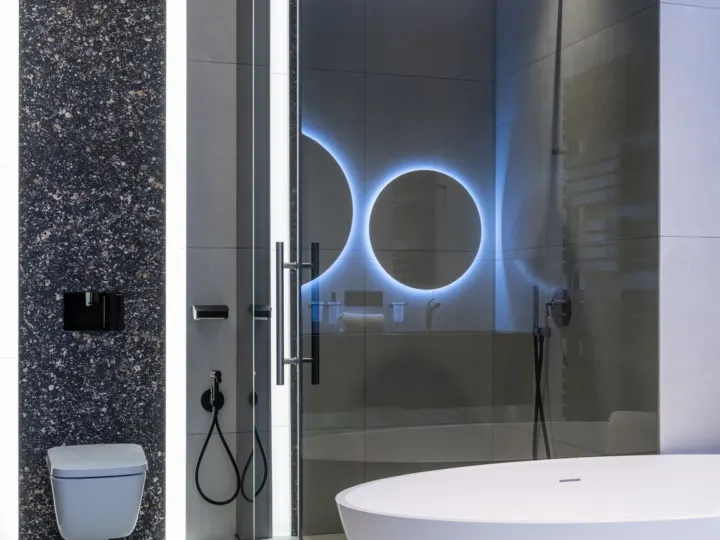
- Lights: wall lights either side of or above the mirror need to be positioned around the finished mirror size. Backlit or demister mirrors need power in the right spot.
- Power points: a point for a hair dryer or shaver often ends up next to the mirror. Keep it clear of the mirror edge unless a cut-out is planned.
- Tiles: decide whether the mirror sits on tiles, on a painted wall, or on a tile panel sized to suit. Line up the mirror with grout lines where possible.
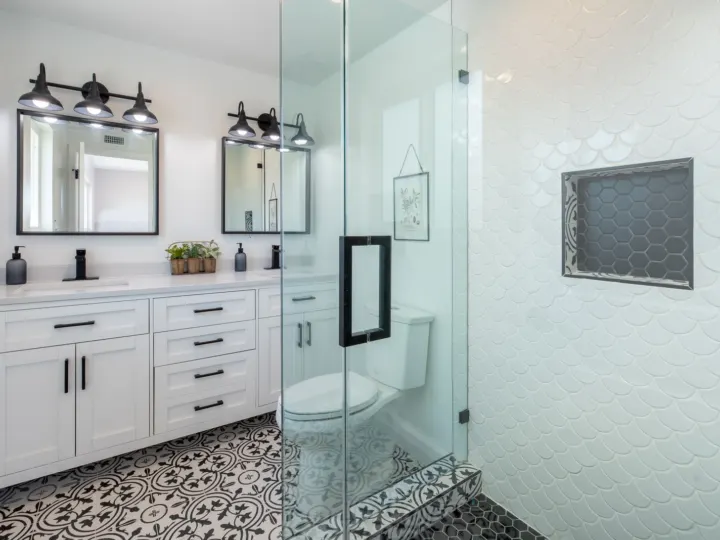
- Shower screens: if you are coordinating hardware finishes, match the mirror frame to the shower screen hardware for a consistent look.
Spec tips for builders
- Schedule mirrors room by room with finished width, height, edge type and any cut-outs.
- Confirm the fixing method and substrate for each mirror.
- Note where safety backing is required after checking with your certifier.
- Order after tiling is set out, using final dimensions.
- Keep edge finishes consistent across a development unless there is a reason to upgrade specific units.
Made to order for the trade
Premier Showerscreens & Wardrobes is a family-run, trade-only business in Glendenning with more than 25 years of experience. Our vanity mirrors are custom made to order in polished edge, bevelled edge and full frame options, using Australian-standard glass products. Builders running multiple jobs can open a trade account.
Have a mirror schedule ready? Send it through our request a quote page or call (02) 9625 6211, Monday to Friday, 8:30am to 5pm.
FAQs
What is the difference between a polished and a bevelled edge mirror?
A polished edge is ground smooth and flat for a clean, minimal look. A bevelled edge has a sloped border around the perimeter that catches the light and gives a more traditional, decorative finish.
How wide should a vanity mirror be?
A common approach is to match the vanity width or go slightly narrower. On double vanities, choose between one long mirror or two mirrors centred on each basin.
Do bathroom mirrors need a safety backing?
It depends on the mirror size, location and fixing method. AS 1288 can require safety-backed mirrors in some situations, so confirm with your certifier and tell your supplier when ordering.
Why do bathroom mirrors get black edges?
Moisture and some cleaning products or incompatible sealants can attack the silver backing from the edge. Good ventilation, mirror-safe adhesives and keeping the bottom edge out of standing water all help.